Inheriting jewellery, gold coins or bullion raises different questions: how they are treated in the estate, how their value is documented, and which taxes may be due when they are sold. Confusing these stages can lead people to consider items exempt that actually form part of the estate, or to apply to jewellery the rules that govern investment gold.
The distinction does not depend on carats alone. An 18-carat piece of jewellery and a 22-carat coin have different characteristics and functions, which may involve different tax obligations.
Jewellery and investment gold: what is the difference?
Carats express the fineness of gold: 18 carats correspond to 750 thousandths, while 24 carats conventionally indicate pure gold. Fineness alone, however, is not enough to determine how an object is treated for tax purposes.
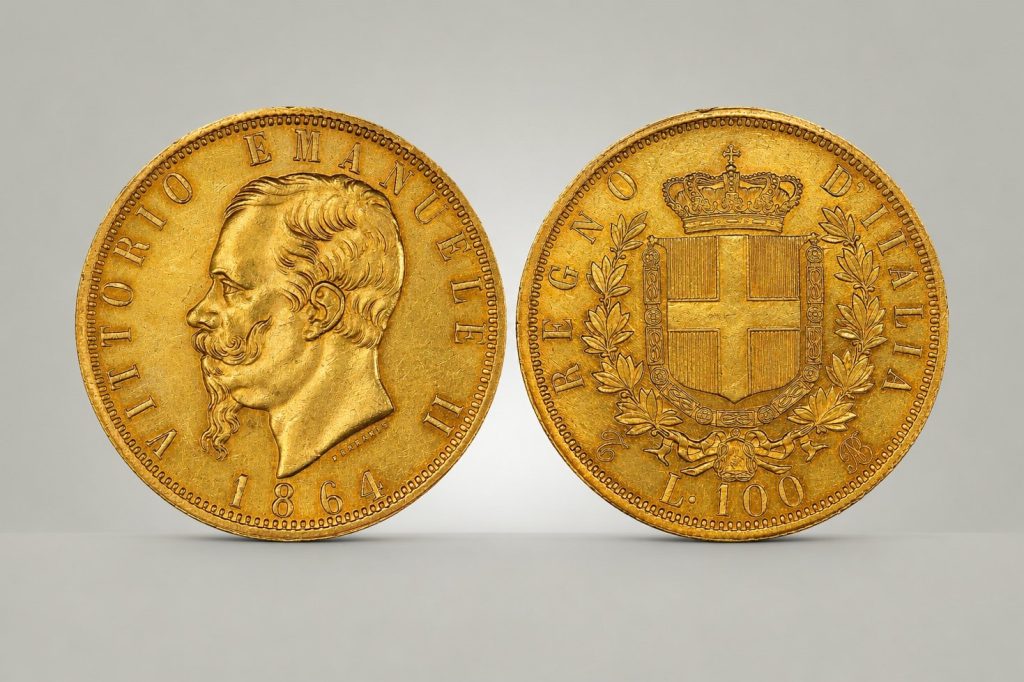
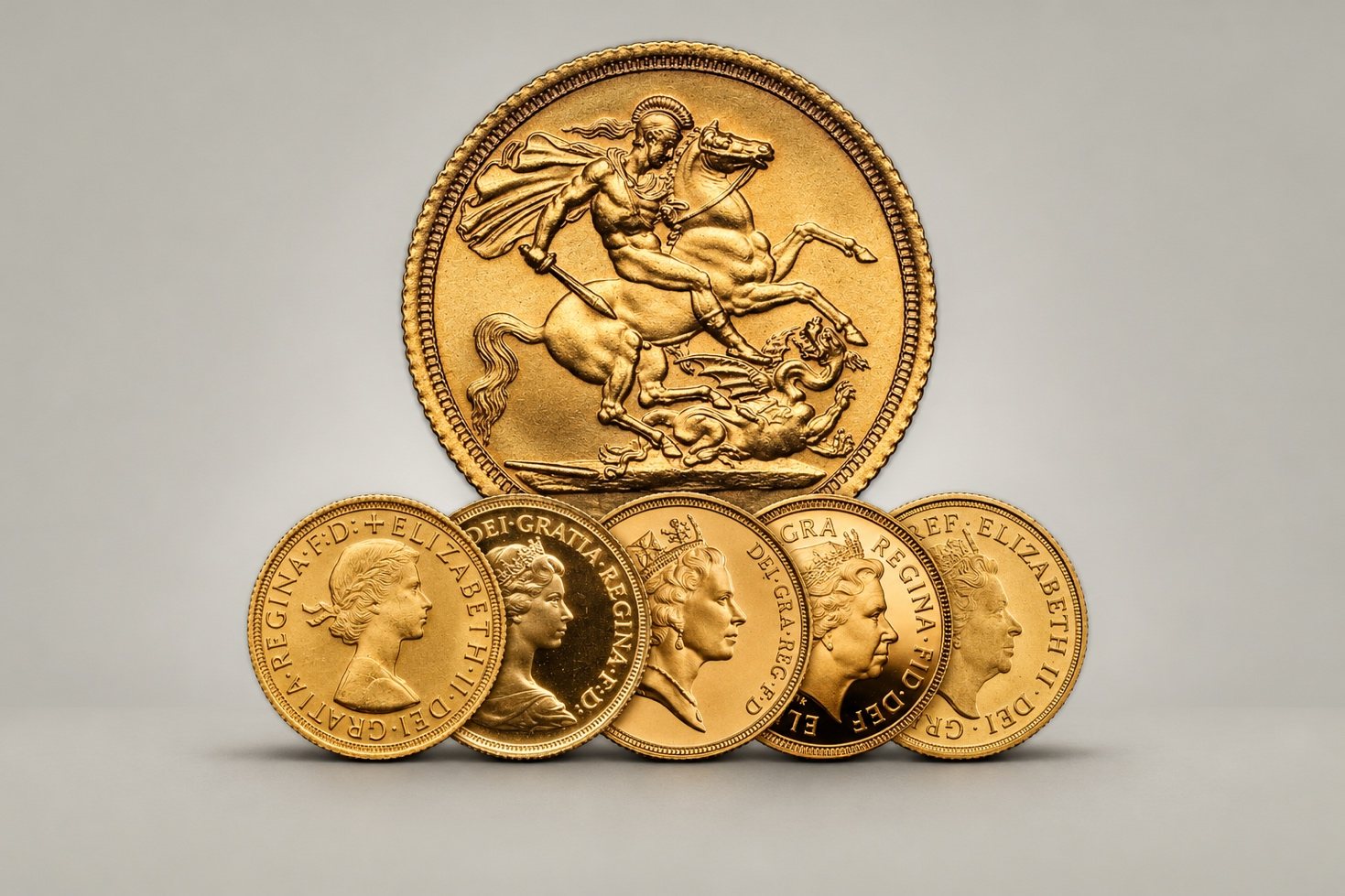
For coins, the legal definition of investment gold requires a fineness of at least 900 thousandths, minting after 1800, current or former legal tender status in the country of origin, and a price that does not normally exceed the value of the gold content by more than 80%. Coins of 22 carats can therefore also fall into this category. For bars and wafers, the fineness threshold is 995 thousandths, subject to the further conditions laid down by law.
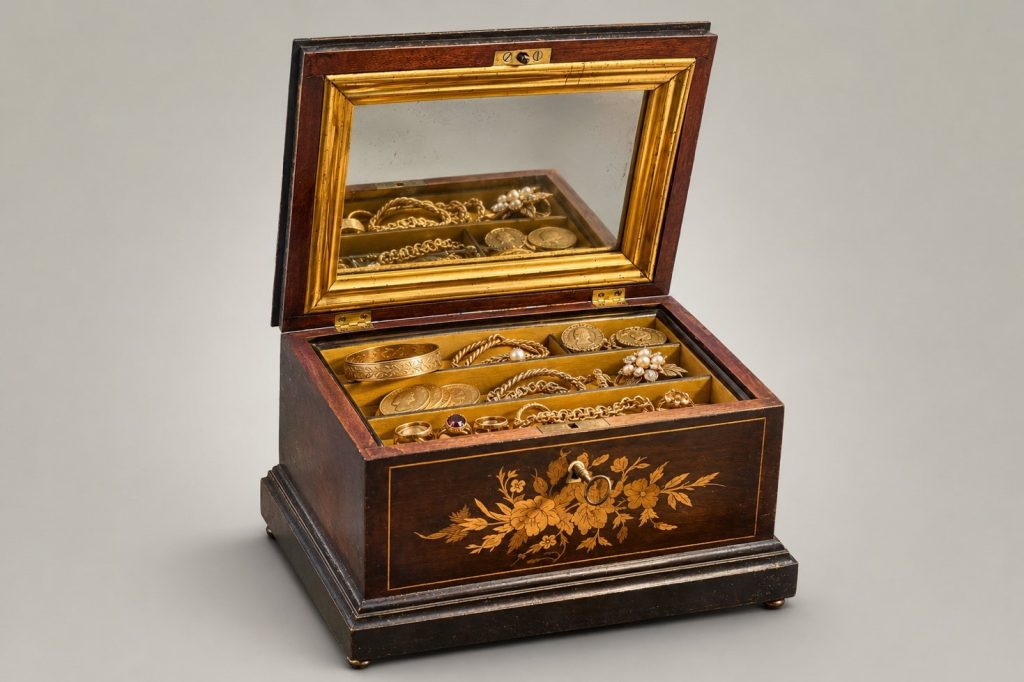
An 18-carat gold ring, necklace or bracelet, on the other hand, remains a piece of jewellery. Its value may include, besides the metal, the stones, quality of workmanship, maker’s mark, period, rarity and collectors’ interest.
When is inheritance tax due?
Jewellery, coins and bullion may form part of the estate’s assets. The tax depends on the degree of kinship and on the taxable value of the share received by each beneficiary.
- For the spouse and direct-line relatives, such as children and parents, the rate is 4% on the part of the share exceeding €1,000,000 per beneficiary.
- For brothers and sisters it is 6% above €100,000 per beneficiary.
- Other relatives up to the fourth degree and in-laws within the degrees set by law pay 6% with no allowance.
- All other beneficiaries pay 8%, also with no ordinary allowance.
- Beneficiaries with a severe disability recognised by law are entitled to an allowance of €1,500,000.
Where an allowance applies, the rate is charged only on the excess.
Jewellery worth €30,000: is anything due?
If a child inherits jewellery worth €30,000 and their total share of the estate, calculated according to the tax rules, remains within one million euros, no inheritance tax is due.
The allowance, however, applies to the entire share received: it therefore also includes property, cash, investments and other taxable assets. It is not a threshold reserved for gold and it does not reset for each category of assets.
The absence of inheritance tax does not rule out any taxes relating to real estate, nor the professional costs of handling the estate.
Jewellery, cash and furniture: how does the 10% presumption work?
Italian law deems cash, jewellery and furniture to be included in the estate for a total amount equal to 10% of the net taxable value of the estate, even when they are not declared or are declared at a lower amount.
The 10% is not a tax rate: it is a rule for determining one component of the estate’s assets. It does not mean that 10% of the value of the jewellery must automatically be paid.
The presumption can be overcome by a detailed inventory drawn up in the form required by articles 769 et seq. of the Italian Code of Civil Procedure, showing a different amount. A simple family list or a private valuation report is not automatically equivalent to such an inventory.
Jewellery must also be distinguished from gold held as an investment: it cannot be assumed that coins and bullion are always absorbed into the flat-rate increase provided for cash, jewellery and furniture.
Is an inheritance tax return always required?
Not having to pay the tax and not having to file the return are two different things.
The return must normally be filed within twelve months of death. The exemption applies when all of the following conditions are met:
- the estate passes to the spouse and direct-line relatives;
- the total assets of the estate do not exceed €100,000;
- the estate includes no real estate or real property rights.
An estate consisting solely of jewellery worth €30,000, left to a child, may therefore qualify for the exemption. If it also includes a property, the allowance may avoid inheritance tax but does not remove the obligation to file the return.
Selling inherited jewellery: is 26% tax due?
The ordinary sale of personal jewellery by a private individual generally does not fall under the capital gains taxation that applies to precious metals in raw or coin form.
It is not the 18-carat fineness that leads to this conclusion: what matters is the nature of the object as a piece of jewellery. This reasoning concerns the disposal of personal assets; a business of buying and reselling on a commercial basis requires a different tax treatment.
Jewellery and gold coins in a safe deposit box: when is an inventory mandatory?
If the deceased was the holder or joint holder of a bank safe deposit box, an inventory of its entire contents must be drawn up when it is opened after death. The opening must take place in the presence of a notary or an official of the tax authority, who draws up the inventory. The bank notifies the competent office of the Italian Revenue Agency in advance of the day and time of the opening.
Is the inventory mandatory even if the heir is below the allowance?
Yes. For example, if a child inherits from a parent 18-carat gold jewellery worth €30,000 and their total share of the estate, calculated for tax purposes, falls within the one-million-euro allowance, no inheritance tax is due; but if the jewellery is kept in the parent’s safe deposit box, it must still be inventoried when the box is opened. The allowance affects the calculation of the tax, while the inventory is a formality required for opening the box.
What is the difference between an inventory and a valuation report?
The safe deposit box inventory records which items are present at the time of opening and concerns the contents of that box. A valuation report can accompany the record, describing each item and substantiating its market value at the date of death.
For jewellery, the valuation may take into account the fineness of the gold, the stones, the workmanship, any maker’s mark and the state of preservation. For coins, in addition to weight and fineness, it is necessary to check whether rarity and condition justify a numismatic value higher than that of the gold content.
Selling inherited coins and bullion: the inheritance value
For precious metals in raw or coin form, the so-called investment gold, any capital gain realised by a private individual is subject to a 26% tax.
When the items were acquired by inheritance, the reference tax cost is the value established or, failing that, the value declared for inheritance tax purposes, together with the costs recognised for tax purposes. The price paid years earlier by the deceased is not automatically used.
For example, if the coins have a value of €30,000 recognised for inheritance tax purposes and are later sold for €35,000, the capital gain is €5,000. Leaving costs aside, the 26% tax therefore amounts to €1,300.
Since 2024, where there is no documentation of the purchase cost, the law sets the capital gain on precious metals at the entire sale price. It is therefore essential for the heir to keep the inheritance documents that prove the tax value of the coins or bullion.
A valuation drawn up later does not automatically replace this evidence. Even when the conditions for exemption from filing the inheritance tax return are met, it is necessary to clarify, before the sale, how the tax cost will be documented.
Inherited investment gold: reporting to the UIF
In addition to tax obligations, a declaration to the UIF, the Financial Intelligence Unit of the Bank of Italy, may be required. For gold transactions subject to these rules, the ordinary threshold is €10,000; there is also a monthly aggregation rule for transactions of the same type with the same counterparty, each of at least €2,500.
The UIF specifies that, for transfers by inheritance, the declaration must be made by the heir, indicating the deceased as the counterparty. The ordinary deadline is the end of the month following the transaction; the UIF FAQs identify the date on which the succession opens as the reference date for the inheritance transfer.
This obligation is separate from the inheritance tax return and should be checked promptly. Ordinary jewellery intended for personal adornment does not, by its nature alone, fall within the categories of gold subject to this reporting.
The role of valuing jewellery and coins
A valuation makes it possible to identify the items and substantiate their value at the relevant date. For coins, it is necessary to record type, quantity, weight, fineness, authenticity, condition and any numismatic interest. For jewellery, stones, workmanship, maker’s marks, period and condition must also be considered.
The market value of a piece of jewellery may differ from the melt value of the metal and from the price needed to buy an equivalent new item. Similarly, a coin may have a numismatic value higher than that of the gold it contains.
A report intended for inheritance purposes must clarify its purpose, reference date, criteria adopted and market sources. It should then be coordinated with whoever is handling the tax side, especially when a formal inventory must be prepared or the cost must be documented for a future sale.
If you have inherited jewellery or gold coins, I can help you identify the items and determine their value, preparing a valuation report to be coordinated with the professional handling the estate.