

When damage does not lead to compensation: the case of two Lalique vases
A well-known Italian insurance company requested technical advice to assess the position to take with a client seeking reimbursement for the accidental breakage of two vases attributed to René Lalique.
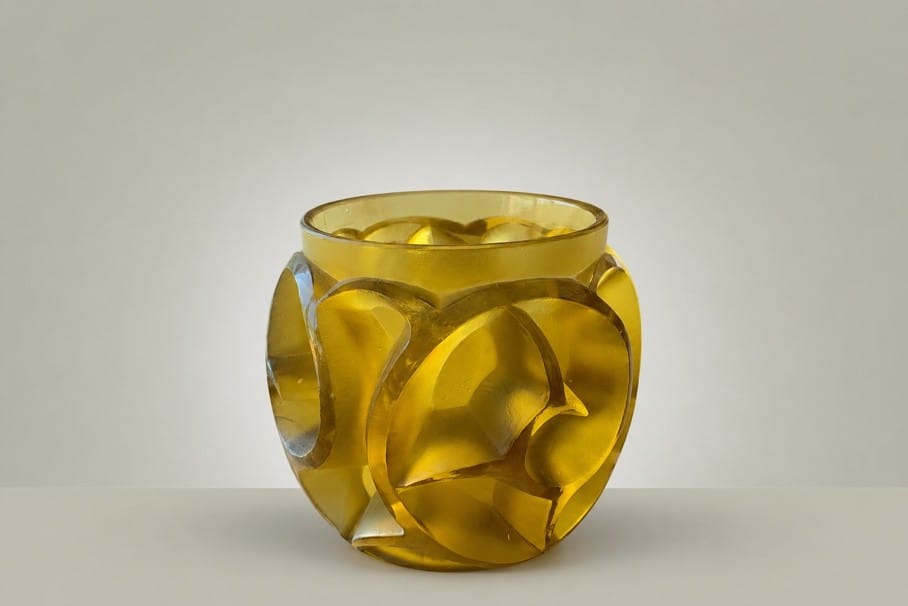
The objects were presented as valuable pieces by the celebrated French artist and designer, a leading figure in Art Nouveau and early 20th-century glassmaking. Specifically, the request concerned two models attributable to Lalique: a “Tortues” vase and a “Tourbillons” vase, both created in 1926.
The question posed by the insurance company was not limited to the theoretical value of the objects but to a crucial aspect: did the vases still have a commercial value before the accident?

The preliminary analysis
The first phase of the activity concerned the identification of the models and the comparison with the international antiques market.
The “Tortues” vase, 27 cm high, in the amber version, is catalogued under no. 966 and appears to have been produced starting in 1926. The appraisal noted the presence of the signature “R. Lalique” impressed in the glass paste. This model was auctioned thirteen times between 1992 and 2017, three of which were for the amber version, with values ranging from approximately €16,630 to €16,992.
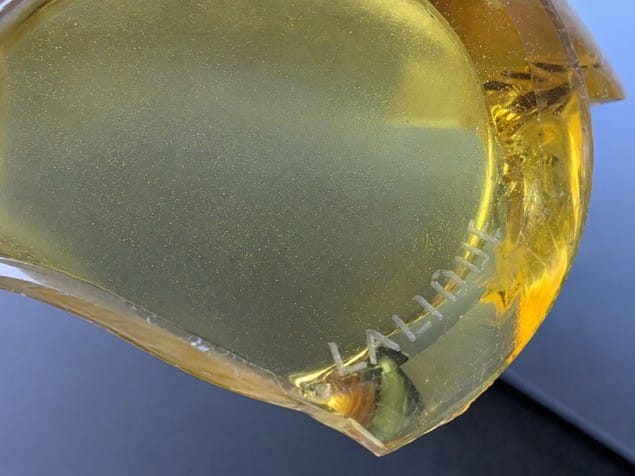
The “Tourbillons” vase, 20 cm high, in lemon yellow, also produced since 1926, bore the engraved signature “R. Lalique.” This model was auctioned thirty times between 1991 and 2020, with highly variable results and some unsold lots. This fluctuation was also due to the presence of copies and imitations on the market, a circumstance that necessitated particularly careful verification of the signature and authenticity. To verify this, I contacted the Lalique Foundation, which kindly provided me with the image below on the left.

The theoretical value and the actual value
Based on market comparisons, the appraisal identified some repurchase values, always subject to confirmation of authenticity and the existence of intact conservation conditions.
The Lalique vase, model Tortues, was valued at €16,831.00; the Lalique vase, model Tourbillons, was valued at €17,700.00; and a later version of the same model was valued at €2,900.00.
However, in the collectible glass market, economic considerations cannot be separated from the state of preservation. The antique and collectors’ market for Lalique glass requires very high levels of integrity: broken, damaged, altered, or restored pieces can substantially lose their marketability.
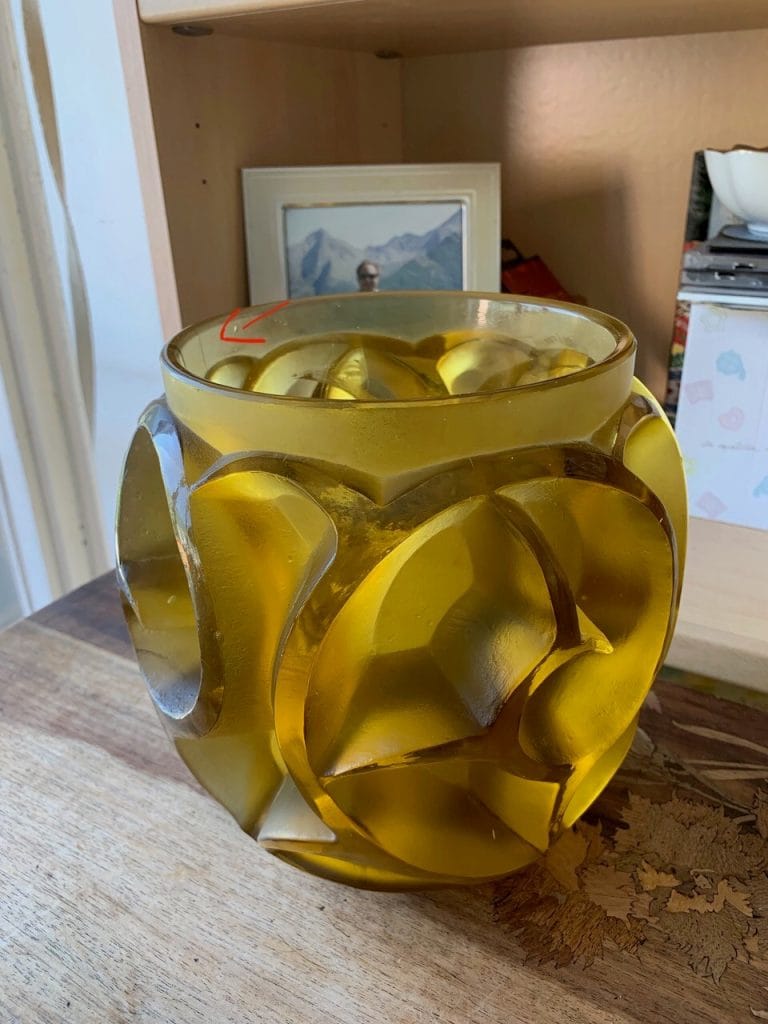
In this specific case, analysis of the available images revealed that the vases had been damaged and altered even before the reported accident. This circumstance had a significant impact on the insurance assessment.
The decisive technical point
The central aspect of the consultancy was to distinguish between: “theoretical value of a complete, authentic and marketable specimen” and “actual value of the object in the state it was in before the reported breakage“.
This distinction is fundamental in insurance. Compensation cannot be calculated on the ideal value of a perfect asset when documentation demonstrates that the item was already compromised before the event.
In the case in question, photographs of the vases in their pre-damage condition showed clear signs of damage: cracks and chipping. The technical conclusion was therefore that, although they were potentially important models if intact and authentic, the specimens in question were not considered commercially valuable in the documented condition.

The outcome of the consultation
The report allowed the insurance company to obtain a reasoned technical opinion, useful for correctly assessing the customer’s request.
The expert’s intervention clarified that the damage complained of could not be related to the market value of intact specimens, since the objects had already been altered and damaged before the accident. Consequently, it was not possible to attribute a significant commercial value to them for reimbursement purposes.
Why this case is significant
This case history highlights how important it is, in insurance valuations relating to antiques, applied art and collectibles, not to limit oneself to identifying the artist or model.
In the art glass market, and particularly for sophisticated pieces like those by René Lalique, authenticity is just one of the elements to be verified. The state of preservation can, in fact, make the difference between a piece of significant economic value and one with no real marketability.
The photographic documentation prior to the accident proved crucial: it allowed us to establish that the loss of value was not an exclusive consequence of the reported event, but rather stemmed from previous conditions that were already compromised.
Conclusion
This case demonstrates how an appraisal can play a crucial role not only in the financial valuation of an asset, but also in the proper management of an insurance dispute. In this case, it distinguishes between the abstract value of two intact Lalique models and the actual value of the analyzed pieces, which were already damaged before the accident. This allowed the insurance company to base its decision on documented, objective grounds, consistent with the dynamics of the collectors’ market.